
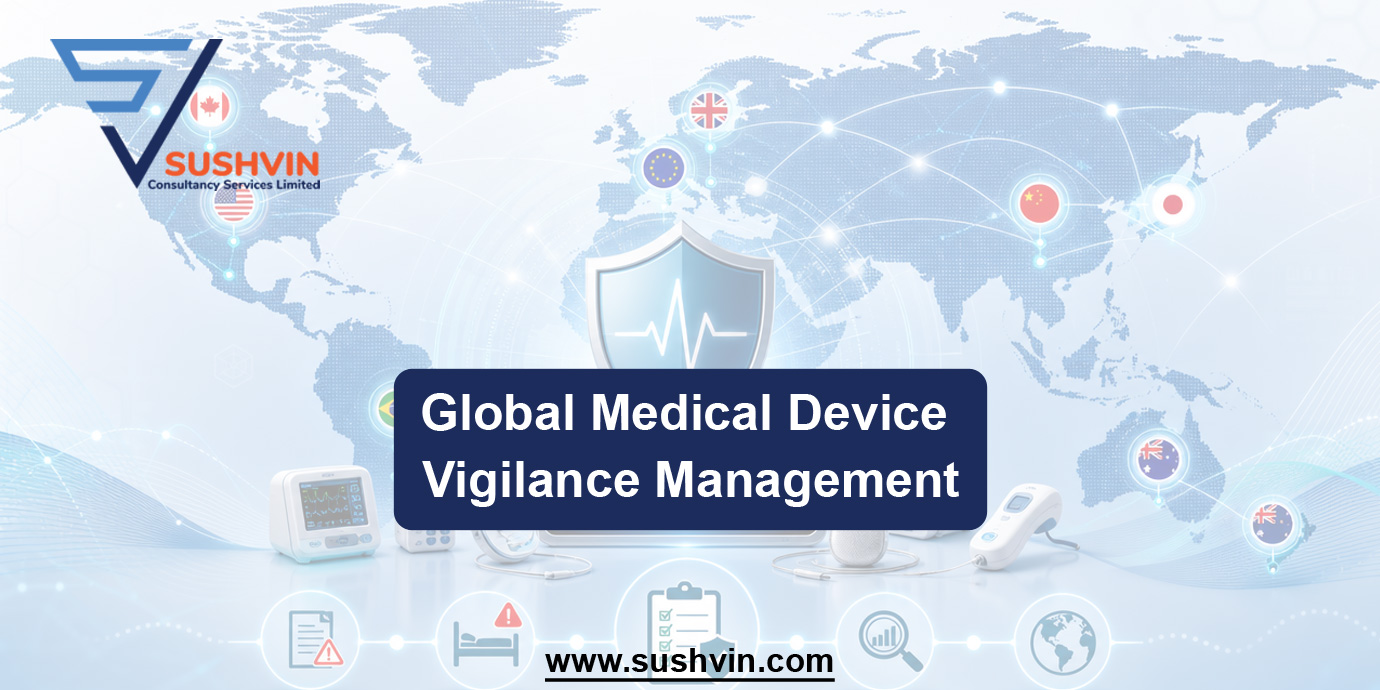
Vigilance management for medical devices and in vitro diagnostics is the system that connects patient safety and regulatory accountability. It covers the detection, assessment, reporting, and follow-up of incidents that may affect device performance or patient health once products are on the market.
Medical device vigilance reporting is a critical part of post-market surveillance. It ensures regulators are correctly informed of adverse events, allowing timely interventions to protect patients. Although the principle is common, the timelines and processes vary widely across jurisdictions.
Importance
Medical device vigilance is not optional, failure to meet vigilance requirements can lead to:
By placing multiple regions side by side, the infographic makes it immediately clear that success in vigilance depends on speed, clarity, and regional expertise.
United Kingdom: MHRA’s MORE System
Post-Brexit, the UK has developed its own vigilance system under the Medicines and Healthcare products Regulatory Agency (MHRA). Reporting is carried out through the MORE (Manufacturer’s On-line Reporting Environment) system. Reporting timeline include:
These timelines are similar to EU requirements but are tailored to the UK’s independent regulatory framework.
Reporting System
European Union: EUDAMED Oversight of Medical Device Vigilance
In the European Union, medical device vigilance is governed by the Medical Device Regulation (MDR, EU 2017/745) and the In Vitro Diagnostic Regulation (IVDR, EU 2017/746). Oversight is shared between National Competent Authorities (NCAs) and the European Commission, with reporting centralized through the EUDAMED vigilance module. This framework ensures that adverse events are captured consistently across all Member States, supporting transparency and patient safety.
Reporting Timelines
These timelines are harmonized across the EU, ensuring consistency and comparability between Member States.
Reporting System
United States: FDA Oversight of Medical Device Vigilance
In the United States, medical device vigilance is overseen by the Food and Drug Administration (FDA) under the Medical Device Reporting (MDR) regulation (21 CFR Part 803). This framework ensures that adverse events and product problems are reported promptly, enabling the FDA to monitor device performance and protect public health.
Reporting Timelines
Reporting System
Japan: PMDA and MHLW Oversight
In Japan, the Pharmaceuticals and Medical Devices Agency (PMDA) and the Ministry of Health, Labour and Welfare (MHLW) is responsible for vigilance. Reporting deadlines are :
Reports are submitted directly to PMDA, and manufacturers must ensure their SOPs reflect calendar-day calculations, not working days. This distinction is critical for compliance. Japan emphasizes documentation and consistency, requiring manufacturers to classify severity accurately and maintain robust internal reporting systems.
China : National Medical Products Administration (NMPA)
China’s National Medical Products Administration (NMPA) has strengthened vigilance requirements through regulatory reforms. The Regulation on the Supervision and Administration of Medical Devices (revised in 2025) mandates:
China’s vigilance system is changing, with increasing emphasis on transparency and alignment with international standards. Manufacturers must also consider language and local requirements, as submissions must be in Chinese.
Canada: Medical Devices Regulations (SOR-98-282)
Canada’s vigilance system is governed by the Medical Devices Regulations (SOR-98-282) and control by Health Canada. Timelines are as followed:
This distinction between actual and potential harm reflects Canada’s pragmatic approach. Reports are submitted via the Medical Device Problem Reporting system, and manufacturers must align vigilance timelines with their periodic safety update reports (PSURs) to demonstrate consistency. Canada’s system is notable for its clarity and emphasis on proportionality.
Australia: TGA Oversight of Medical Device Vigilance
In Australia, medical device vigilance is overseen by the Therapeutic Goods Administration (TGA). The vigilance framework is part of the broader post market monitoring system, ensuring that adverse events and safety concerns are promptly reported and addressed to protect patients and maintain regulatory trust.
Reporting Timelines
These timelines align with international norms but emphasize proportionality: urgent threats require rapid reporting, while less severe incidents allow for a longer window.
Reporting System
Brazil: ANVISA Oversight of Medical Device Vigilance
In Brazil, medical device vigilance is overseen by the Agência Nacional de Vigilância Sanitária (ANVISA) through its Technovigilance system (Sistema Nacional de Vigilância Sanitária – SNVS). The framework is designed to ensure rapid detection, reporting, and corrective action for adverse events, protecting patients and strengthening regulatory accountability.
Reporting Timelines
These timelines reflect Brazil’s emphasis on speed and proportionality, ensuring urgent threats are escalated immediately while allowing more time for less severe events.
Reporting System
New Zealand: Medsafe Oversight of Medical Device Vigilance
In New Zealand, medical device vigilance is overseen by Medsafe, the Medicines and Medical Devices Safety Authority under the Ministry of Health. Unlike some jurisdictions with rigid statutory timelines, New Zealand’s vigilance framework emphasizes prompt notification and proactive monitoring rather than fixed deadlines.
Reporting Timelines
This flexible approach reflects New Zealand’s reliance on sponsor accountability and clinical judgment, rather than prescriptive calendar day rules.
Reporting System
Comparison table summarizing the vigilance reporting deadlines for Japan, China, Canada, the UK. USA, Australia, New Zealand, Brazil and EU.
Medical Device Vigilance Reporting Deadlines
| Region | Regulatory Authority | Death / Serious Injury / Public Health Threat | Other Serious Incidents / Adverse Events | Notes |
|---|---|---|---|---|
| United Kingdom | MHRA (MORE system) |
2 days (serious public health threat) 10 days (death or serious deterioration of health) |
15 calendar days | |
| EU | NCAs / European Commission (EUDAMED) | 2 days (public health threat); 10 days (death/serious deterioration) | 15 days | Harmonized timelines; UDI & IMDRF coding required; trend reporting via PSURs |
| USA | FDA (21 CFR Part 803, eMDR system) | 30 days (manufacturers/importers); 10 days (user facilities) | 30 days (malfunctions) | 5-day reports required for urgent risks; UDI mandatory for traceability. |
| Australia | TGA (MDIR/IRIS) | 10 days | 30 days | Mandatory reporting by sponsors and healthcare facilities since 2026; CAPA documentation required |
| Japan | PMDA / MHLW | 15 calendar days | 30 calendar days | Reports must use calendar days, not working days. Documentation and severity classification are critical. |
| Brazil | ANVISA (Technovigilance/SNVS) | 72h (Brazil); 10d (outside Brazil) | 10–30 days | BRH responsible; reports in Portuguese; corrective actions and public alerts required |
| China | NMPA | 10 calendar days (death or serious public health threat) | 15–30 calendar days (depending on severity) | Submissions must be in Chinese. System evolving with stronger transparency and alignment to global standards. |
| Canada | Health Canada | 10 calendar days (actual death or serious deterioration) | 30 calendar days (potential for death or serious deterioration) | |
| New Zealand | Medsafe (WAND database) | Immediate | As soon as practicable | Sponsor-driven system; flexible timelines; removal from WAND possible for non-compliance |
Final Thought
Medical device vigilance management has evolved into a critical regulatory function, not just an administrative requirement. It is important for regulatory compliance and patient safety. Comparing vigilance systems in Japan, China, Canada,the UK, USA, Brazil, Canada, Australia, New Zealand and EU reveal shared priorities which is patient safety, transparency, and accountability although they have procedural differences.
For global manufacturers, these differences make it essential to create local SOPs, use clear severity categories, and keep strong documentation. Aligning internal systems with different regulatory requirements is critical to maintain compliance and protect patient safety.
Reference
- 1. PMDA International Medical Device Regulators Forum (IMDRF)
- 2. China Med Device Emergo by UL
- 3. Canada.ca Emergo by UL
- 4. GOV.UK NSF
Email us at info@sushvin.com | Medical Device Regulatory Updates - Monthly Newsletter | SUSHVIN Consultancy


